Marcus Miller
Host

Marcus Miller
– Host

Marcus Miller, winner of two GRAMMY® Awards, the 2013 Edison Award for Lifetime Achievement in Jazz (Holland), the 2010 Victoire du Jazz (France) and appointed UNESCO Artist for Peace in 2013, is not only an exceptional musician but also a highly gifted composer and producer who we are proud to call a host and headliner on The Smooth Jazz Cruise. The legendary album Tutu, written and produced for Miles Davis, sealed his international fame when Marcus was only 25.
Over the course of his career, Marcus has collaborated with artists as varied and talented as Eric Clapton, George Benson, Luther Vandross, Roberta Flack, Aretha Franklin, Chaka Khan, Al Jarreau, George Duke, Wayne Shorter, Lalah Hathaway and Herbie Hancock. The multi-instrumentalist and world-renowned bassist has also produced his own genre-defying albums, among them The Sun Don’t Lie, Tales, M2, Silver Rain, Free, A Night in Monte Carlo (with the Monte-Carlo Philharmonic Orchestra), and Renaissance. Along with international tours, Marcus Miller hosts “Miller Time,” a weekly program on SiriusXM.
Over the course of his career, Marcus has collaborated with artists as varied and talented as Eric Clapton, George Benson, Luther Vandross, Roberta Flack, Aretha Franklin, Chaka Khan, Al Jarreau, George Duke, Wayne Shorter, Lalah Hathaway and Herbie Hancock. The multi-instrumentalist and world-renowned bassist has also produced his own genre-defying albums, among them The Sun Don’t Lie, Tales, M2, Silver Rain, Free, A Night in Monte Carlo (with the Monte-Carlo Philharmonic Orchestra), and Renaissance. Along with international tours, Marcus Miller hosts “Miller Time,” a weekly program on SiriusXM.
Boney James
Host

Boney James
– Host

Boney James’ personal relationship with music has never been anything but solid. Picking up the sax at age 10 in his native New Rochelle, New York, “I immediately loved it, and it pretty quickly became my favorite hobby.” By the time he entered his teens, James was already gigging with bands, and he turned pro at 19. He apprenticed as a sideman for artists like Morris Day and the Isley Brothers, touring and doing sessions for seven years before cutting his first solo album in 1992. The independently released Trust led immediately to a major label deal and a string of increasingly successful recordings and nonstop touring.
Now a four-time GRAMMY® nominee with four RIAA Gold records and career sales topping three million units, James continues to defy genres as a two-time NAACP Award nominee, a Soul Train Award winner and named one of the Top 3 Billboard Contemporary Jazz Artists of the Decade. James says he’s looking forward to heading out on the road and seeing how the material from Solid (the saxophonist/composer’s 17th album as a leader) evolves from night to night. “I love playing live, maybe more than I ever did,” he adds. “That has not gotten old at all. A lot of guys get tired of the traveling but it’s still a joy for me every time I go out there and play.” It’s still a joy to his multitude of fans too. “I try to be there for the people who are interested in listening to my music,” says James, “to be solid in that relationship and to never let anybody down. I often get great compliments from the people that come to my shows, that I ‘never disappoint’ them, and that’s very gratifying to me. That’s what I was trying to express with this title, that sense of character. To stand for something principled.”
Now a four-time GRAMMY® nominee with four RIAA Gold records and career sales topping three million units, James continues to defy genres as a two-time NAACP Award nominee, a Soul Train Award winner and named one of the Top 3 Billboard Contemporary Jazz Artists of the Decade. James says he’s looking forward to heading out on the road and seeing how the material from Solid (the saxophonist/composer’s 17th album as a leader) evolves from night to night. “I love playing live, maybe more than I ever did,” he adds. “That has not gotten old at all. A lot of guys get tired of the traveling but it’s still a joy for me every time I go out there and play.” It’s still a joy to his multitude of fans too. “I try to be there for the people who are interested in listening to my music,” says James, “to be solid in that relationship and to never let anybody down. I often get great compliments from the people that come to my shows, that I ‘never disappoint’ them, and that’s very gratifying to me. That’s what I was trying to express with this title, that sense of character. To stand for something principled.”
Brian Culbertson

Brian Culbertson

Brian Culbertson is an award-winning multi-instrumentalist, writer and producer who crosses genres between contemporary jazz, R&B, and funk and heralds from the musically rich city of Chicago. Starting at the early age of 8 on piano, he quickly picked up several other instruments by age 12 including drums, trombone, bass, & euphonium. Inspired by the great R&B/Jazz/Pop artists of the 70’s like EWF, Tower of Power, Chicago, David Sanborn, and others, Brian Culbertson started composing original music for his 7th grade piano recital and hasn’t stopped having self-produced 16 solo albums, most of which have topped the Billboard charts.
The acclaimed musician also founded the Napa Valley Jazz Getaway, a 5-day celebration of wine, food, art and music that draws big entertainers and devoted fans year after year. Brian is always striving to push the boundaries of the contemporary jazz scene which is evident by his latest album, Funk! This new set is a throwback to the stanky P-Funk records from back in the day combining the throbbing bass lines, greasy horn lines, sing-a-long choruses and landing hard on the ‘One.’
The acclaimed musician also founded the Napa Valley Jazz Getaway, a 5-day celebration of wine, food, art and music that draws big entertainers and devoted fans year after year. Brian is always striving to push the boundaries of the contemporary jazz scene which is evident by his latest album, Funk! This new set is a throwback to the stanky P-Funk records from back in the day combining the throbbing bass lines, greasy horn lines, sing-a-long choruses and landing hard on the ‘One.’
Jonathan Butler

Jonathan Butler

The youngest of 13 children, Jonathan Butler grew up in poverty in Cape Town, South Africa, ruled by Apartheid and segregation. Butler began his singing career at age 7, releasing his first album in 1973 and winning the Best New Artist GRAMMY® in South Africa the following year at age 12. He made history by being the first black artist played on white South African radio while earning three gold records (“Please Stay” went double gold and “I Love How You Love Me” went gold) in 1975 as he became a teenager. More than a decade later, Butler moved to London, England and released his first album internationally. The self-titled set went gold in 1987 in the United Kingdom and in the USA. He received GRAMMY® nominations for Best R&B Song for his R&B-pop vocal hit “Lies” and for Best Jazz Song for the instrumental “Going Home.”
His genre-busting material earned songwriter’s awards and received abundant airplay in multiple radio formats: pop, urban, contemporary jazz, adult contemporary and gospel. Butler’s 2004 album, Surrender, went gold in South Africa where he remains a superstar. Butler is still taking care of people back home. Last fall, he launched the Jonathan Butler Foundation in his native country to fund music education programs that give children the purpose to overcome a life of drugs and poverty just as he did. His music has purpose, providing comfort and genuine inspiration. When he sings, he testifies to the glory and healing power of love. When he plays guitar, his fast fingers innately find notes of passion and divinity. Jonathan Butler’s recording career has carried him far, far beyond his wildest dreams. He’s living his dream and that is a blessing for us all.
His genre-busting material earned songwriter’s awards and received abundant airplay in multiple radio formats: pop, urban, contemporary jazz, adult contemporary and gospel. Butler’s 2004 album, Surrender, went gold in South Africa where he remains a superstar. Butler is still taking care of people back home. Last fall, he launched the Jonathan Butler Foundation in his native country to fund music education programs that give children the purpose to overcome a life of drugs and poverty just as he did. His music has purpose, providing comfort and genuine inspiration. When he sings, he testifies to the glory and healing power of love. When he plays guitar, his fast fingers innately find notes of passion and divinity. Jonathan Butler’s recording career has carried him far, far beyond his wildest dreams. He’s living his dream and that is a blessing for us all.
Candy Dulfer

Candy Dulfer

Dutch saxophonist Candy Dulfer has earned her place in music history — with her GRAMMY®-nominated debut album Saxuality, live and studio performances with the greatest names in music (including Prince, Beyoncé, Van Morrison, Aretha Franklin, Dave Stewart and Maceo Parker) and her worldwide concert tours and legendary live shows. She is the recipient of the Edison Jazz Lifetime Achievement Award, the most prestigious music award in The Netherlands. She’s been a popular headline artist on The Smooth Jazz Cruise for many years and is thrilled to return once again to add her energetic funky stuff to the musical mix.
Kirk Whalum

Kirk Whalum

Soulful, passionate, stirring…these are the words most often used to describe Kirk Whalum’s music. Forged from his Memphis, (TN) gospel roots and his 1980‘s initiation into the thriving Houston, TX nightclub scene, Kirk’s big, rich tenor sound is unmistakably his. The ’80s were highlighted by Kirk’s stepping out of his blossoming sideman role and forming his own band. It was there that Kirk ultimately developed both his “voice” and songwriting and led to five successful albums with Columbia Records, including Cache, Kirk’s first #1 album. As well, Kirk and Bob received a GRAMMY® nomination for their collaboration album, Joined at the Hip.
Peter White

Peter White

In a career that spans nearly four decades, over a dozen solo recordings and countless performances, Peter White has maintained a reputation as one of the most versatile and prolific acoustic guitarists on the contemporary jazz landscape. Armed with an unparalleled combination of lyricism and energy, he combines elements of jazz, pop and classical guitar to create a sound that is singular and at the same time accessible to a broad audience. Barely a year after his first professional gig in England at 19 years old, he was invited to join Al Stewart’s band.
In addition to opening for artists like Linda Ronstadt, Billy Joel and Queen, White worked with Stewart in the studio on The Year of the Cat, which became a huge hit for Stewart in 1976. His 20-year association with Stewart included co-writing Stewart’s 1978 hit, “Time Passages.” White launched his solo recording career with the 1990 release of Reveillez-Vous. On the road, he has participated in numerous “Guitars and Saxes” tours with players such as Rick Braun, Richard Elliot, Jeff Golub, Lee Ritenour, Kirk Whalum and Boney James, and has established an annual “Peter White Christmas Tour.”
In addition to opening for artists like Linda Ronstadt, Billy Joel and Queen, White worked with Stewart in the studio on The Year of the Cat, which became a huge hit for Stewart in 1976. His 20-year association with Stewart included co-writing Stewart’s 1978 hit, “Time Passages.” White launched his solo recording career with the 1990 release of Reveillez-Vous. On the road, he has participated in numerous “Guitars and Saxes” tours with players such as Rick Braun, Richard Elliot, Jeff Golub, Lee Ritenour, Kirk Whalum and Boney James, and has established an annual “Peter White Christmas Tour.”
Rick Braun

Rick Braun

“I just want to continue to explore the boundaries of what I am capable of as a musician,” declares acclaimed chart-topping trumpeter, composer and producer Rick Braun. Known for his impeccable technical chops, melodic wizardry and keen compositional prowess, the consummate Los Angeles-based musician has been thrilling audiences for decades. Braun has made a mark staying true to his own musical voice and eclectic influences that have allowed him to collaborate across genres with some of the biggest names in music including Rod Stewart, Tom Petty, Sade, Natalie Cole and REO Speedwagon. Having clenched over 20 number one Smooth Jazz hits, Braun has collaborated with all of the brightest stars in contemporary jazz. His 17th recording as a leader, Around The Horn, was released in February 2017, and is an adventurous mix of originals as well as exhilarating reinventions of hits by Coldplay, Alicia Keys and Charlie Puth and Selena Gomez.
There was a time when Braun was contemplating pursuing medical school, but music won out. In his long career he has crafted his own distinctive sound and become a staple on contemporary jazz radio. He has produced Number One hits for David Benoit, Marc Antoine and former Rod Stewart band sidekick Jeff Golub. Braun achieved collaborative success on massive hits with Boney James, as a member of RnR with saxophonist Richard Elliot and with BWB, a powerhouse trio completed by GRAMMY® winners Kirk Whalum and Norman Brown.
There was a time when Braun was contemplating pursuing medical school, but music won out. In his long career he has crafted his own distinctive sound and become a staple on contemporary jazz radio. He has produced Number One hits for David Benoit, Marc Antoine and former Rod Stewart band sidekick Jeff Golub. Braun achieved collaborative success on massive hits with Boney James, as a member of RnR with saxophonist Richard Elliot and with BWB, a powerhouse trio completed by GRAMMY® winners Kirk Whalum and Norman Brown.
Richard Elliot

Richard Elliot

Imagine how the juices will flow on the high seas for saxophonist Richard Elliot, who says he gets much of his creative inspiration from behind the wheel of his car in L.A. traffic. The Scottish-born musician has been on the music scene for more than three decades and released his 17th solo album, Lip Service, in July 2014. The project features seven original compositions along with three covers of soul and pop hits from the ’80s (“Shining Star” by The Manhattans), ’90s (“Anytime” by Brian McKnight) and present day (“When I Was Your Man” by Bruno Mars).
Richard Elliot got his start at age 19 with the Chapman Stick-based quartet Kittyhawk, played in soul band Tower of Power in the ’80s and has continued topping the charts and touring the world as both solo artist and with innovative groups like Guitars & Saxes and, most recently, Summer Horns (comprised of Mindi Abair, Gerald Albright and Dave Koz).
Richard Elliot got his start at age 19 with the Chapman Stick-based quartet Kittyhawk, played in soul band Tower of Power in the ’80s and has continued topping the charts and touring the world as both solo artist and with innovative groups like Guitars & Saxes and, most recently, Summer Horns (comprised of Mindi Abair, Gerald Albright and Dave Koz).
Mindi Abair

Mindi Abair

During her remarkable two-decade recording career, saxophonist/vocalist Mindi Abair has garnered two GRAMMY® nominations, recorded with some of the biggest names in music and built a substantial following among jazz and blues audiences with her soaring melodies and powerhouse style. You might know her as the featured saxophonist on American Idol, sitting in with Paul Shaffer on The Late Show with David Letterman and with The Roots on The Tonight Show Starring Jimmy Fallon, or from moonlighting on tour with Duran Duran or Aerosmith. As a solo artist, she has consistently topped the Billboard Contemporary Jazz and Blues charts. In 2018, Mindi Abair and The Boneshakers won 8 Independent Blues Awards including Artist of the Year, and an Independent Music Award for Best Blues Song Fan Award for “Pretty Good for A Girl” featuring Joe Bonamassa.
Eric Darius

Eric Darius

With a trademark jump and crowd-captivating energy throughout his live show, Eric Darius is breaking the mold of modern jazz. The Billboard chart-topping, American saxophonist, songwriter, producer and performer shines in a vibrant new light as he reinvents himself through Unleashed, an expansive and ambitious genre-spanning album brimming with passion and purpose, soul and sweat, charisma and charm.
“It’s called Unleashed because I wanted to push myself out of my comfort zone on this project and truly unleash my full musical potential in a live studio setting,” Eric shares. “This album is an honest reflection of myself and my growth both musically and personally over the past several years, and it really takes the listeners on a musical journey from start to finish! This album feels like it’s the first time I’ve truly expressed myself in every single way in a musical sense and I’m unleashed like never before.”
Unleashed is a long time coming for Eric Darius, and without a doubt his proudest work to date. He credits part of that achievement to the creative freedom he’s gained as an independent artist; Unleashed is Eric’s second album released through his own label SagiDarius Music, following 2018’s Breakin’ Thru.
Euge Groove

Euge Groove

A graduate of the University of Miami’s School of Music, Steven EUGEne GROoVE was born in Hagerstown, Maryland and grew up in a musical home. His mother played piano and Euge began his own musical pursuits at the age of seven, beginning with the piano and adding the saxophone at nine.
He later discovered two saxophonists who had a profound effect on his approach to playing. “One was French classical player Marcel Mule, who really defined what the sax was supposed to sound like for me and the other was David Sanborn. He took that sound and brought it into the mainstream world,” reminisces Euge Groove. He explains, “I’ve listened to everyone from Grover (Washington Jr.) and (David) Sanborn to (Charlie) Parker and (John) Coltrane as well as (Michael) Brecker, (Stan) Getz, King Curtis, Junior Walker, Richard Elliott and Kirk Whalum. The thing is, the more mature we become the more those influences fuse into something new. I always listened to a lot of R&B growing up, fused that with Pop music, then with the Gospel music. Hopefully all these influences come through in my music and I am able to create my own unique expression.”
With the release of Comfort Zone, Euge Groove further asserts himself as one of the most distinctive artists in Contemporary Jazz and assures us that he is in the zone. He also lets us in on a little secret – balance is the key to everything. “When I am not making music, I love driving the California coast. I’m very fortunate that I can be to the coast in about 15 minutes. It’s very Zen for me. Also, pizza. I love making pizza. I have a wood pizza oven in my backyard, and when I’m up to it, I get up early in the morning, make the dough, the sauce, and for dinner fire up the oven. I’ve got to be in the mood though. I get more requests in the house than I make. It’s like music for me; You can’t force it!”
He later discovered two saxophonists who had a profound effect on his approach to playing. “One was French classical player Marcel Mule, who really defined what the sax was supposed to sound like for me and the other was David Sanborn. He took that sound and brought it into the mainstream world,” reminisces Euge Groove. He explains, “I’ve listened to everyone from Grover (Washington Jr.) and (David) Sanborn to (Charlie) Parker and (John) Coltrane as well as (Michael) Brecker, (Stan) Getz, King Curtis, Junior Walker, Richard Elliott and Kirk Whalum. The thing is, the more mature we become the more those influences fuse into something new. I always listened to a lot of R&B growing up, fused that with Pop music, then with the Gospel music. Hopefully all these influences come through in my music and I am able to create my own unique expression.”
With the release of Comfort Zone, Euge Groove further asserts himself as one of the most distinctive artists in Contemporary Jazz and assures us that he is in the zone. He also lets us in on a little secret – balance is the key to everything. “When I am not making music, I love driving the California coast. I’m very fortunate that I can be to the coast in about 15 minutes. It’s very Zen for me. Also, pizza. I love making pizza. I have a wood pizza oven in my backyard, and when I’m up to it, I get up early in the morning, make the dough, the sauce, and for dinner fire up the oven. I’ve got to be in the mood though. I get more requests in the house than I make. It’s like music for me; You can’t force it!”
Vincent Ingala
Vincent Ingala
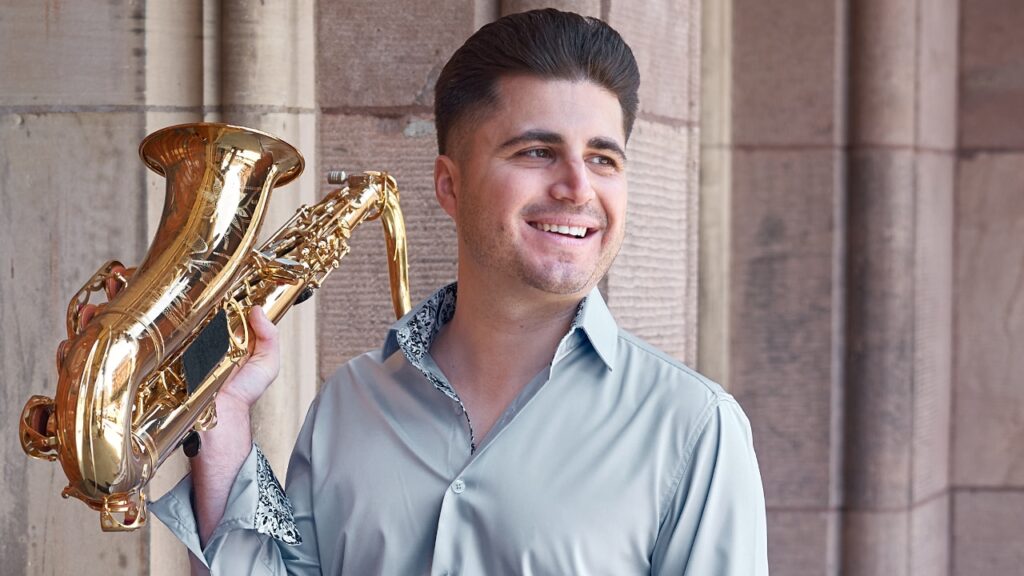
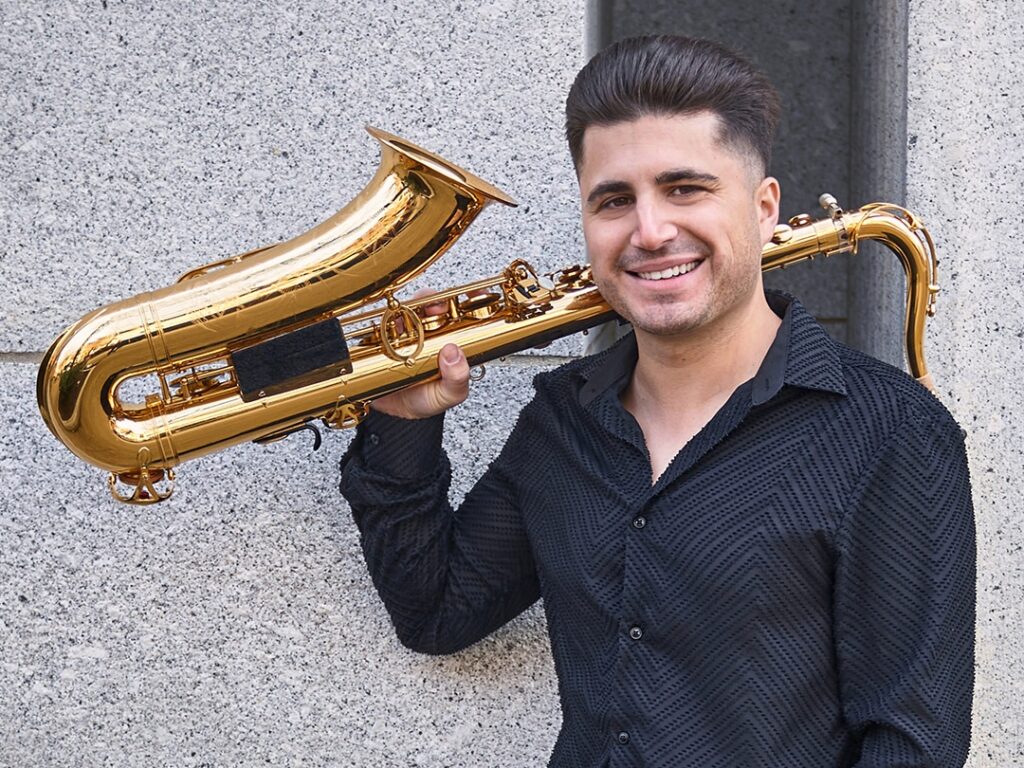
Multi-instrumentalist, composer and producer, Vincent Ingala has emerged as a star since his 2010 critically acclaimed debut album, North End Soul. The charismatic saxophonist has been named Billboard Smooth Jazz Artist of the Year in 2012, SiriusXM Watercolors Breakthrough Artist of the Year in 2013 and his music is consistently found atop the most noteworthy music charts in the world, including four number one hits on the Billboard Smooth Jazz Chart. The Yamaha Performing Artist has been wowing live audiences as a regular on the popular smooth jazz festival and cruise circuit for several years. His versatility on multiple instruments makes him sought after both live and as a producer.
DW3

DW3

To borrow from a classic quote about the late, great James Brown, DW3 is today’s hardest-working band in soul business, working fans into a dance and romance frenzy with their R&B, old school funk, jazz and Latin-fired magic. Since 2003, brothers Eric and Billy Mondragon and Damon Reel have set the high-energy mood on The Smooth Jazz Cruise. With four Billboard-charting hits, DW3 has also established themselves as a popular national recording group. The three chose to self-title their latest recording to reflect the culmination of their steady and inspiring evolution from ultimate, first-call party band to multi-faceted artists, songwriters and producers.
Alonzo Bodden
Host / Comedian
Alonzo Bodden
– Host / Comedian

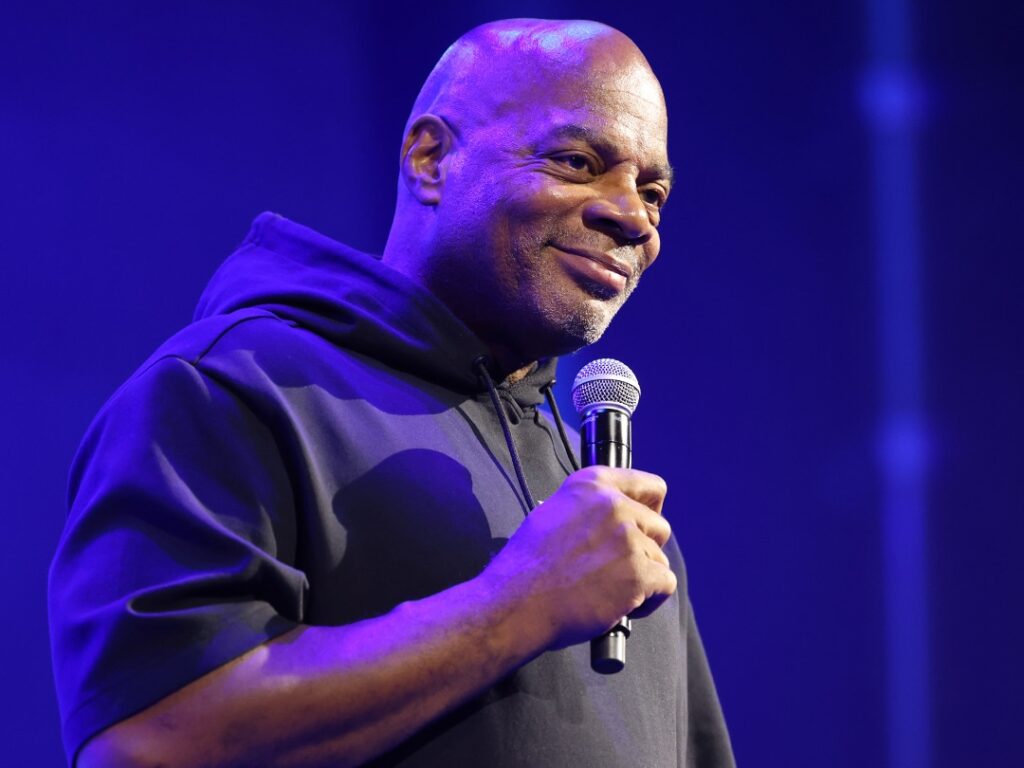
After 30 years in comedy and over 30 Jazz Cruises, Alonzo Bodden has been able to marry his two passions: comedy and jazz. “There is nothing like the cool and creativity of the jazz world, I love it,” says Alonzo. He credits winning season three of NBC’s Last Comic Standing, as his introduction to America. With five comedy specials, sitcoms, The Tonight Show, Late Night with Conan O’Brien, Comedy Central’s The Daily Show and The Nightly Show to his credit, he has done it all. His comedy CD, Man Overboard, was recorded on The Smooth Jazz Cruise.
Eric Marienthal
Music Director

Eric Marienthal
– Music Director

Signature Cruise Experiences is very proud of its selection of Eric Marienthal as the Music Director for its cruise programs. Eric has won two GRAMMY® Awards and has been nominated nine times as a member of the Chick Corea Elektric Band, Jeff Lorber Fusion and Gordon Goodwin’s Big Phat Band. Eric has recorded 15 solo CDs including his latest GRAMMY®-nominated CD entitled Double Dealin’ with legendary trumpeter Randy Brecker. Eric was also named one of the top three alto saxophonists in Jazziz Magazine’s Reader’s Poll and has been the Music Director for all sailings of The Smooth Jazz Cruise for the past several years.